
Property Owner and Manager FAQ's
What is the benefit to landlords?
| In addition to helping individuals and families afford a stable, safe home in our community, there are several benefits of partnering with the Washington County CDA to provide voucher-accepted rentals: | See also: |
- Timely, guaranteed rent payments. In 2025, the average per-unit rent assistance payment to partner landlords in Washington County was $1,051/month.
- Reduced turnover and vacancy costs. Twin Cities voucher-holders average seven years since move-in.
- Responsible tenants. Rental assistance is scarce, and few eligible people succeed in securing a spot on a waiting list. After waiting years for assistance, voucher-holders are motivated to care for their apartment and follow lease terms, or they risk losing their assistance and their home.
- Responsive customer service. A single point of contact answers questions and connects you to the best person to provide timely assistance. At the CDA, email housingassistance@washingtoncountycda.org.
- A problem-solving partner. Our staff is trained to support tenants when requested and to remind tenants of their lease obligations, so their problems don’t become your problems. Staff can also help you work through issues or refer you to landlord/tenant mediation.
- Free inspections. A trained professional provides free inspections to ensure the unit is habitable and residents in your unit are safe, helping the property retain its value.
- Satisfaction from helping others.
Why is it important to become a landlord partner?
Our housing resources haven’t kept up with our growth, and it is increasingly difficult for individuals and families to find a home:
- Since 2000, renter households in Minnesota have seen a median increase in monthly rent from $620 to $1,290 in 2024. According to data from the Federal Reserve and Macrotrends, the inflation-adjusted median household income in Minnesota actually experienced a net decrease of roughly -6% to -10% from the year 2000.
- The limited number of affordable housing options contributes to local homelessness. According to the Point-in-Time count conducted annually, Washington County has seen a 40% increase in homelessness from 2015 to 2025.
- Wage- and fixed-income increases haven’t kept pace with the high cost of housing; low vacancy rates limit people’s housing choices (5% vacancy across all rental homes in the Twin Cities metro area; vacancy rates for affordable housing remain exceptionally low, often tighter than the overall market).
- Housing costs burden many Twin Cities residents; nearly half of all renter households pay more than 30% of their income to live in their home.
We need your help. When you become a landlord partner, you ensure that more of our community members can live and work in our community.
What happens when a landlord decides to accept a tenant who has rental assistance?
The process of renting to an applicant with rental assistance is similar to renting to a family who does not have assistance. There are several rental assistance programs, and all programs work in a similar way.
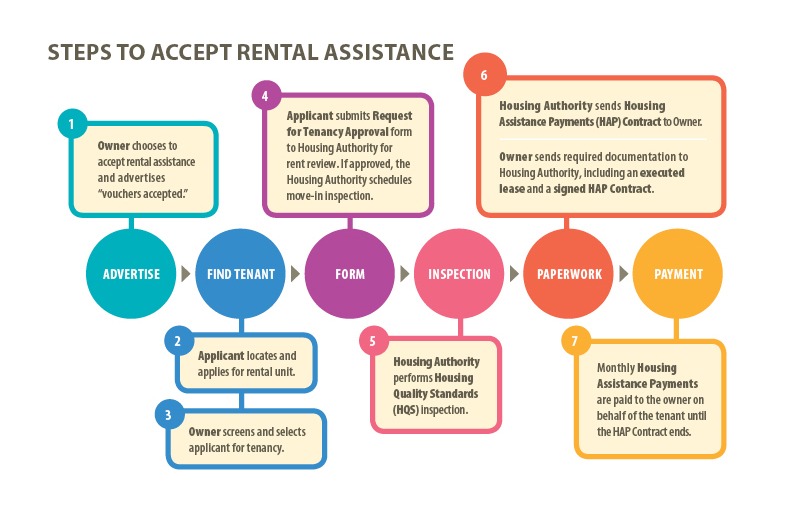
You screen and select tenants using your standard screening criteria. After you approve the applicant for the unit, the voucher-holder will ask you to complete a Request for Tenancy Approval (RTA) or Request for Lease Approval form. The RTA form asks questions about the rental unit, including unit address, contract rent amount, security deposit amount, description and year the building was built, utilities that are included and excluded in the rent, and landlord contact information.
When the Housing Authority receives the completed RTA form:
- We check that the rent is affordable for the applicant and is reasonable compared to similar units.
- For new move-ins, property managers will receive a Non-Life Threatening Deficiency certification verifying the unit has no life-threatening deficiencies. A physical inspection will be scheduled within 60 days of the lease start date. Inspections will take place biennially after that. A guide is available on the CDA’s website so you know what to expect and can prepare for the inspection. We cannot release payments to you until the certificate is received.
- After we approve all paperwork, we send you a Housing Assistance Payment (HAP) contract with the Housing Authority to sign and return along with a copy of the signed lease and payments begin.
How does a landlord get involved in a rental assistance program?
- A landlord becomes involved when an applicant with rental assistance contacts you. The person looking to rent a home will tell you that they have a voucher and ask if you are willing to work with them and participate in the program.
- To advertise a rental unit for which you accept rental assistance, include “Vouchers Accepted” or “Rental Assistance Accepted” in your HousingLink listing. Landlords can advertise for free with HousingLink.
What are the initial and ongoing requirements to accept rental assistance?
We work to make the process as easy as possible. There are three requirements to participate:
- Complete paperwork prior to the initial move-in.
- Promptly report any proposed changes in the rent agreement, lease terms, or lease violations.
- Provide housing that meets Inspection Standards. Inspection occurs at initial move-in and annually or biennially (you will receive a notice). Landlords are not required to attend inspections. Click here for more inspection information.
What is the process to register a building or get certified to participate? How does a landlord advertise to individuals and families who have rental assistance?
There is no pre-approval or certification process. Become a partner landlord by advertising units with “Vouchers Accepted” or “Rental Assistance Accepted,” and advertise on the free HousingLink listing service. To learn more, please call the CDA at 651-458-0936 or send an e-mail to housingassistance@washingtoncountycda.org.
What kind of inspection is it?
The inspection follows federal housing quality standard protocol. The purpose of the inspection is to ensure that the people moving into your rental unit are safe. Click here for more information on inspections.
What if the unit fails the inspection?
We will notify you of the failed items and provide a certification of repair form to complete and return to the CDA. Missing smoke detectors and CO2 detectors are the most frequent inspection fails. Click here for an inspection checklist to help you prepare.
Are there limits on rents?
Landlords have full discretion on setting rents, and you should set rent at a reasonable level for the location and condition of your unit. Each person with rental assistance can afford a different amount, and applicants know what rents they can afford. The CDA reviews the rent and utility allowance to determine if we can approve the rent for a particular applicant.
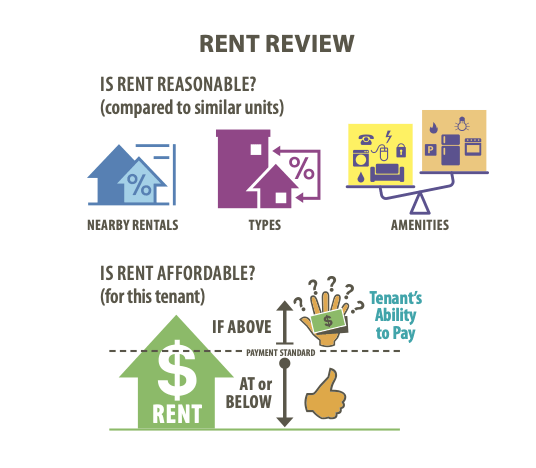
- First, some rents may not work for families with very low incomes, as residents in Washington County cannot pay more than 50% of their income in rent at move-in and be eligible for rental assistance. This review considers resident-paid utilities.
- Second, the rent must be reasonable when compared to similar nearby rental homes. We typically complete and contact you with the review results within three days of receiving the RTA form.
How does the Housing Authority assess if rent is “reasonable?”
“Reasonable” is assessed based on program rules. The Housing Authority compares the rent in your lease to rent for similar units. Units are similar if they are the same size and type, and if they have similar amenities, services, age, or maintenance. Rent is reasonable if it is in line with rent in similar units. Rents may not be approved if similar homes nearby rent for less.
Is the Payment Standard the maximum allowable rent?
No, the purpose of the Payment Standard is to guide the Housing Authority in situations where program participants have no or extremely low incomes. Many individuals and families with rental assistance work or receive other income. Many can afford rents above these amounts.
How much does the tenant pay for rent and how much does the Housing Authority pay?
Housing Choice Voucher tenants typically pay 30% of their monthly income in rent directly to the landlord. This will vary for each family and the rent portions may fluctuate during the year. The Housing Authority pays the rest of the rent directly to the landlord each month. How rent is shared varies by program. For example, some rental assistance programs pay a fixed amount of assistance on behalf of all participants. In all cases, the Housing Authority will let you know what portion of the rent you will collect from the tenant and what you will collect from the agency.
The rent is higher than the Housing Authority will allow. The family has offered to pay the difference. Is that ok?
No. That is considered fraud. All payments between a landlord and tenant need to be disclosed in your lease. The Housing Authority sets the portion of rent the tenant is responsible for. In this case, you can choose to lower the rent or tell the family you are not able to work with them.
What should a landlord do if the rent changes?
If the rent changes after the initial term of the lease, you must provide 60-day written notice to the Housing Authority.
Does the Housing Authority screen individuals or families for the landlord?
No. The Housing Authority does not screen residents for rental or credit history. Screening and selection are the responsibility of the landlord. Screen prospective tenants using your standard screening criteria. We recommend you check references of all applicants (rent assisted and non-assisted) for past rental history. We may be able to provide known contact information for the resident’s current and previous landlord.
When and how are landlords paid rent by the Housing Authority?
You can expect the Housing Authority payment on the first business day of the month. We pay rent via direct deposit. The first mouth rent may be delayed if the HAP contract and lease are not received in time to the CDA to make the payment.
Who decides which utilities are or are not included in the rent?
The landlord decides who pays for which utilities. If the tenant is responsible for some or all utilities, list it on the RTA form. Utilities are part of assessing whether the rent is affordable to the family and whether the rent is reasonable.
What happens if a resident damages their unit, violates their lease, or “skips” or vacates a unit without proper notice?
Landlords enforce lease terms as with any tenant. Our staff work to improve the success of every tenancy. Tenants who violate their lease can lose their rental assistance. CDA staff enforce program rules, protecting both tenants and landlords. For tenants, one of those rules is complying with the lease. We encourage landlords to notify the Housing Authority any time you issue a lease violation to a tenant with rental assistance.
We are available to help tenants and landlords communicate about tenant or property concerns. We may provide a referral to landlord/tenant mediation services, such as those found at Community Mediation Minnesota or HOME Line. Our staff can also connect tenants to resources beyond rental assistance.

You must be logged in to post a comment.